Source: Daybreak Game Company and Massively Overpowered. Verified against multiple sources; datamines and reports are labelled as such, not stated as fact.
What Happened
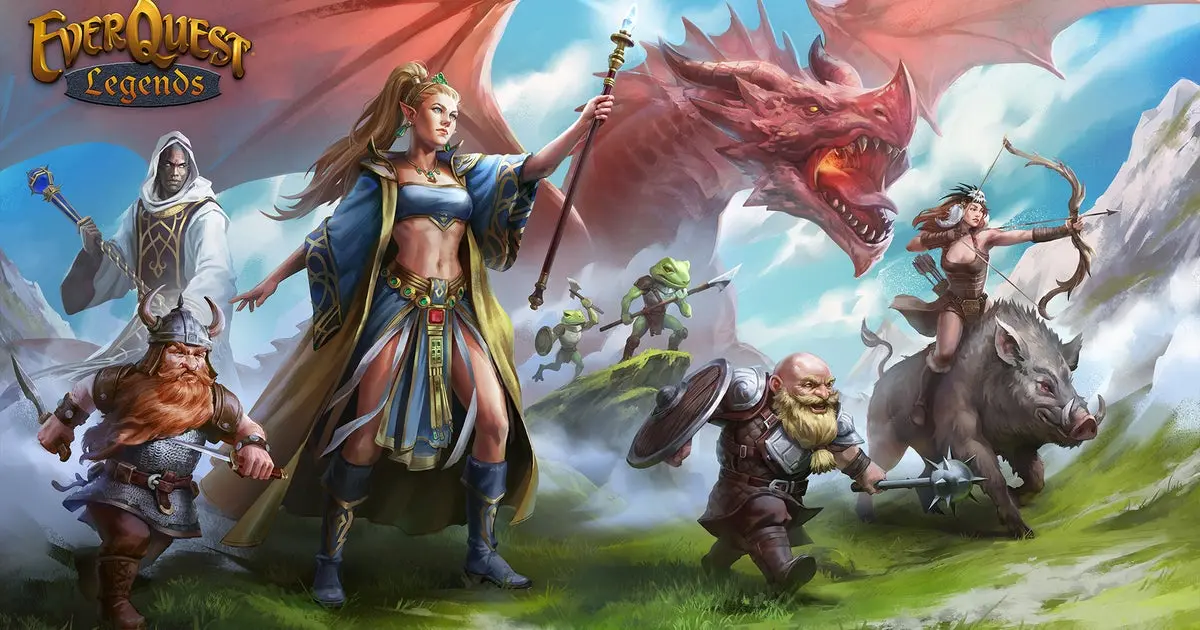
EverQuest Legends, the reimagined 1999 MMO published by Daybreak and built by indie studio Game Jawn, entered a paid pre-order beta and laid out its monetization: a buy-to-play box price, a monthly subscription, planned paid expansions, and a cash shop running on a currency called Iridium (about 500 for $5). Between closed and open beta, core inventory was quietly cut -- character loadouts dropped from 16 to 2, augmentation and equipment storage was roughly halved, and dragon's-hoard slots fell from 125 to 50 -- and several of those cuts reappeared as things you can buy back in the shop (loadout slots, storage increases, weight-reduction bags), alongside a class-unlock token at roughly $15 (one token is earned free at level 50).


The origin story makes the backlash sharper. The solo-friendly multiclass idea at the heart of Legends was popularized by The Heroes' Journey, an unauthorized fan emulator server that Daybreak shut down with legal threats before shipping a sanctioned take on the same idea with indie developer Game Jawn, a history Wolfshead Online has documented at length. Players who followed the game here from that shutdown thought they were finally getting the fan server with a budget. The pre-order beta was their first look at what it costs.
Players and content creators reported timeouts and chat bans when they raised monetization complaints on official channels and Discord. On July 8, executive producer David 'Sysyphus' Youssefi published a currency-and-shop letter that put numbers on the store, said some slots would be earnable in-game after launch, and committed to raising starting loadout slots to three and starting equipment slots to 50. The 'quadruple-dipping' and 'bait-and-switch' framing had already stuck.
The beta itself became part of the story. Around 35,000 players signed up for closed beta and only a few hundred got in, with priority keys going to streamers who broadcast the feature-rich build for weeks. The $20 pre-order was the only other way through the door. When paying players then found the trimmed inventory, project director Eda 'Secrets' Spause told the official Discord it was 'unreasonable to assume that 5,000 Tradeskill Depot slots was ever intended.' Cutting features is one thing. Calling the expectation unreasonable after streamers showed those features for weeks is the line the community kept quoting.


The Details
- EverQuest Legends is a Daybreak-published reimagining of the 1999 MMO EverQuest, developed by indie studio Game Jawn, in a paid pre-order beta ($19.99, July 1 to 21) ahead of a July 28 launch.
- Its cash shop runs on Iridium, priced at roughly 500 for $5 with tiers up to $99.99 for 12,000; the most expensive revealed item is a class-unlock token at about $15, though one token is earned free at level 50.
- The model combines a buy-to-play box price, a monthly subscription, and the Iridium cash shop, on top of planned paid expansions.
- Between closed and open beta, character loadouts were cut from 16 to 2, augmentation and equipment storage was roughly halved, and dragon's-hoard inventory dropped from 125 to 50 slots.
- Several reduced features (loadout slots, storage increases, weight-reduction bags) are purchasable in the cash shop, which drove the over-monetization backlash.
- Executive producer David 'Sysyphus' Youssefi's July 8 letter detailed the currency and shop pricing, said some slots would be earnable through gameplay after launch, and committed to raising starting loadout and equipment slots.
- Players and content creators reported timeouts and chat bans when raising monetization concerns on official channels and Discord.


What This Means for the Riot MMO
Riot has never put a business model on the record for its MMO. The closest thing that exists comes from Greg Street, the project's original executive producer, who said in December 2020 that a box price or subscription would be unlikely given Riot's track record of free-to-play games monetized through cosmetics, and who was explicit that nothing was final. We dug into what pay-to-win would even mean for a Runeterra MMO when the question first came up. EverQuest Legends is a live demonstration of why the track record matters: a beloved classic stacking a box, a sub, expansions, and a cash shop that sells back inventory players used to have for free.
It extends the exact monetization question the Riot MMO will be judged on, the one Aion 2's storefront and ESO's new season pass already raised. When we covered this game's solo-friendly relaunch, the story was goodwill. Two weeks of beta pricing burned most of it. The honest read is not that Riot will copy this, but that the EverQuest backlash shows how fast a nostalgia relaunch loses trust when the pricing reads as extraction.
- Riot has never committed to a business model, but its entire catalog is free-to-play monetized through cosmetics; EQ Legends shows how fast a box-plus-sub-plus-shop stack reads as greedy.
- Selling back inventory slots players had for free is the fastest way to read as pay-to-win, the exact reputation trap a cosmetics-first studio has to avoid.
- Timing out and banning players who complained turned a pricing problem into a trust problem -- a community-management lesson for any Riot MMO launch.
Your Take
Would a box + subscription + cash shop model be a dealbreaker for you in Riot's Runeterra MMO?
Reported from Massively Overpowered, MMORPG.com, Wolfshead Online, and Daybreak's official announcements. The MMO read is ours and clearly speculative. Analysis by RuneGrove.